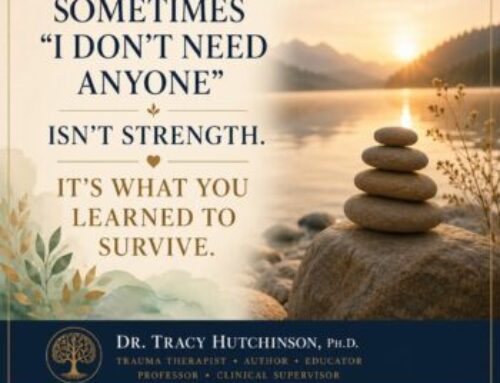
If you’ve ever wondered why certain people seem to generate constant conflict, this breaks it down clearly.
In Part III of this series, It Really Isn’t Me: It’s You, you will learn the 4 main traits of high-conflict people (HCP’s) or emotionally immature, so you can spot them early before the damage is done.
Key Points:
- High-conflict people often repeat the same behaviors across relationships.
- Spotting these behaviors early allows you to set boundaries before stress, burnout, or escalation occurs.
- Some traits to look out for include gaslighting, blame-shifting, and all-or-nothing thinking.
This article is also published in Psychology Today, January 2026, and this is the author’s original version.
As discussed in my latest book, Adult Children of High Conflict Parents, those with high conflict traits can be overt or covert. While overt behaviors are quite obvious (yelling, temperamental, chronic anger or moodiness, etc.), covert behaviors can be just as damaging and also tend to generate significant conflict. While they are not typically marked by overt emotional volatility, they can still provoke it through other behaviors. In contrast, overt behaviors are more obvious, as seen in sociopaths, who often display pronounced emotional volatility.
However, psychopaths are often covert in their behaviors because their emotions are controlled or dulled, but their impact in a relationship is dangerous and harmful. Take psychopathy, or those with dark triad traits–these individuals with pathological personality traits are often emotionally controlled, and they are very charming initially. However, their level of callousness, lack of empathy or caring about your emotional experience, and chronic gaslighting as they rewrite reality and events, can cause a lot of emotional abuse and harm in your life. This can be in your family, with your partner, or those at work or in your social circles.
Hallmarks of HCP’s:
There are behavioral signatures of HCP’s like the following:
- You cannot have a stable, peaceful relationship with them. There will always be drama, emotional rollercoasters, and chaos in your relationships.
- Normal communications strategies do not work.
- Conflict and negative feelings increase over time and are never resolved or repaired.
- They drain you of your energy, which includes emotional and cognitive function, and cause imbalances in your nervous system (where trauma is stored)
- They need someone, usually you, to stabilize them.
- They push you into chronic dysregulation. Which means you may become angry, shut down due to their dysfunction, and they will blame you. (e.g., “You have anger issues”) However, you are reacting normally due to being gaslit.
In summary, it is not about fighting a lot, but it is about someone whose baseline “way of being” is chaos, avoidance, blame, gaslighting, and projection. This can often be found in cluster B personality disorders such as narcissism, psychopathy, sociopathy, and borderline personality disorders. However, similar characteristics can be found with alcoholics, those with substance abuse issues, and other undiagnosed mental health issues.
4 Core Traits of High-Conflict People
HCP’s are individuals who reliably (though usually unintentionally) create relational chaos because of four core traits:
1. A rigid, unchanging pattern of blaming.
They externalize everything, meaning every conflict becomes your fault, someone else’s fault, or life’s fault — never theirs.
Example:
- You bring up an incident that hurt you, even as close as the day before or months before (like cheating, or an abrupt cut off or stonewalling). The response may be — “Why do you keep bringing this up?” “Why can’t you move on?” “That was a long time ago”.
- The gaslighting — Example: If you respond naturally to your dismissal of harm and hurt, a response like — “You need anger management,” or “you are too sensitive,” or “you are crazy”– whether said overtly or implied, is common.
2. Intense and illogical reactions.
HCP’s usually react predictably, which is why “normal” communication is not possible.
- defensiveness (almost always)
- stonewalling (cutting you off emotionally)
- withdrawal
- hostility (irritability about broken promises when you bring it up, etc)
- rage (overt or covert)
These behaviors, as Gottman recognizes as some of the “four men of the apocalypse” which lead marriages to end quickly, are common in HCPs. The chronic disrespect, moodiness, and lack of communication take their toll over time.
3. All-or-nothing thinking
Common cognitive distortions of HCP’s include:
You’re either perfect or terrible (whether they say this out loud or not).
Lovable/soulmate or best child or you are worthless/enemy, etc.
For example, in relationships or partnerships, it may sound like this:
- “I love you, you mean so much to me.” “I will do anything to make this work.” “I don’t want to lose you” (Love bombing) to the opposite, devaluing with examples like:
- “I am trying to make this work, but you are wrong, and you make it impossible.”
- “I never said that” (things they promised to do in a relationship, such as seek outside help)
4. A complete lack of self-reflection or responsibility.
They cannot tolerate looking inward, and this is universal across:
- narcissistic structures
- antisocial structures (psychopathy, sociopath, dark triad)
- borderline structures (in a different way)
- high-avoidant personalities
They rarely take true accountability, and when they do, it’s usually superficial—like saying “I’m sorry” without being able to explain exactly what went wrong or why. They often reinterpret events, minimize harmful interactions, or even deny them altogether. This inability to take responsibility and show empathy isn’t necessarily intentional; it often stems from an inherent lack of the emotional capacity to do so.
Take a Step to Heal
The good news is that as you start to name the pattern, you can recognize it and heal from it. Identifying emotional abuse, relational trauma, and chronic emotional manipulation is key to healing. I have written a book about HCP’s, particularly parents and family members who possess these characteristics, so you can heal, build mental strength, and find ultimate self-love and self-respect for yourself.
If you’re ready to explore these patterns and begin making sense of your emotional story with HCP’s or parents or family members, I invite you to learn more about Adult Children of High Conflict Parents—a guide to understanding the hidden dynamics that shape adult lives and relationships.
Would you like more information about trauma therapy in Ft. Myers, FL, or online therapy in Rochester, New York? Contact Dr. Hutchinson today »
Dr. Hutchinson is a trauma and EMDR therapist offering online therapy in New York and online therapy in Florida.
Copyright: 2025: Tracy Hutchinson, Ph.D
References:
Hutchinson, T.S. (2025). Adult Children of High Conflict Parents: Find Freedom From your Past, Heal the Pain of Toxic Relational Trauma, & Cultivate Lasting Self- Love. New Harbinger: CA.
Burghart, M., Sahm, A. H. J., Schmidt, S., Bulla, J., & Mier, D. (2024). Understanding empathy deficits and emotion dysregulation in psychopathy: The mediating role of alexithymia. PLOS ONE, 19(5), e0301085.
De Oliveira‐Souza, R., & Hare, R. D. (2022). Refining the link between psychopathy, antisocial behavior, and empathy: A meta‑analytical approach across different conceptual frameworks. Clinical Psychology Review, 94, 102145.
Lester, G. W. (2018). Advanced diagnosis, treatment, and management of DSM‑5 personality disorders (1st ed.). Ashcroft Press & PESI.
Pinheiro da Costa, H., Vrabel, J.K., Zeigler-Hill, V., & Vonk, J. (2018). DSM-5 pathological personality traits are associated with the ability to understand the emotional states of others. Journal of Research in Personality, 75; 1-11.
Would you like to learn more or EMDR therapy in Rochester, NY or Ft. Myers, FL? Contact Dr. Tracy Hutchinson today »
Dr. Hutchinson is a trauma and EMDR therapist offering online therapy in New York and online