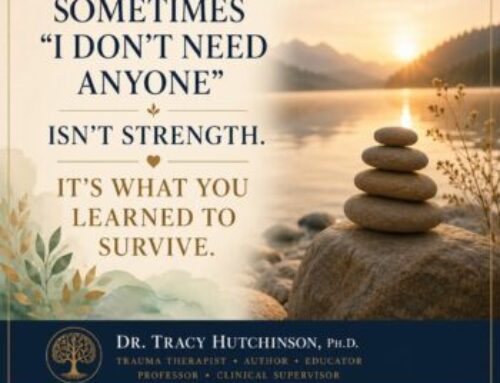
Key Points:
- Empowerment Begins With Self-Respect: Small actions that honor your boundaries and choices build self-trust and eventually, self-love.
- Boundaries Are a Superpower: Saying no, protecting your time, and asserting your needs are practical ways to increase your mental strength.
- Small Choices Add Up: Everyday decisions, even minor ones, accumulate to create a life that feels authentic, aligned, and empowered.
This article explores universal strategies for reclaiming agency, setting boundaries, and cultivating self-respect that may be particularly helpful for those who grew up in controlling or emotionally invalidating households. This will help empower you and build more mental strength.
Living an empowered life is often misunderstood as feeling confident, decisive, and in control at all times. From the outside, empowerment can look like assertiveness, success, or emotional strength. From a psychological perspective, however, empowerment is something quieter and far more nuanced. For example, an empowered life is not defined by the absence of fear, doubt, or exhaustion. It is defined by agency, which is the internal experience of having choice, voice, and self-trust, even when circumstances are difficult. If you grew up with high-conflict parents and a controlling or narcissistic family system, empowerment can feel especially elusive and out of reach. When your needs were minimized, your reality questioned, or your boundaries ignored, learning to trust yourself again is not a matter of willpower. This emotional trauma is impactful, but you can heal! It is a process of ongoing repair and behaviors that can set you free from your previous conditioning from your upbringing. Here are some tips that can help you change your behavior, which can also be trance-like because it is based on conditioned responses from your toxic family. Your freedom first starts simply with awareness.
5 Simple Steps to Increase Your Personal Power
1. Empowerment Begins With Awareness, Not Force
Healing from toxic relationships and high-conflict family systems reminds us that change does not begin with pushing harder. It actually begins with awareness. Those who struggle with feeling disempowered are highly capable, insightful, and motivated. What they often lack is not strength, but safety. Chronic emotional stress can condition the nervous system to prioritize survival over agency. In this state, people may default to people-pleasing, emotional shutdown, self-doubt, or over-functioning for others. Increasing your personal power begins with noticing these states versus being automatically unaware or unconscious of them.
Empowerment starts by noticing these patterns without judgment. Awareness allows us to recognize when we are reacting out of old conditioning rather than present circumstances. This step alone can be profoundly empowering, particularly for those whose inner experiences were dismissed or distorted growing up. The simple fact that you stop yourself and notice your behavior or your thoughts is literally your doorway to change.
Practical tip: For one day, track every decision you make from small (what to eat) to big (who to spend time with). Ask yourself: Is this choice honoring me? Awareness is the first step toward reclaiming agency.
2. Reclaim Choice in Small, Everyday Moments
Empowerment is not a single decision; it is built through small, repeated acts of choice. Trauma survivors often associate power with risk: speaking up may have once led to punishment, rejection, or emotional withdrawal. As a result, empowerment must be rebuilt gradually and safely.
Examples of micro-choices that support empowerment include:
- Pausing before responding instead of reacting automatically
- Saying no without over-explaining
- Allowing yourself to change your mind
- When your body signals exhaustion, choosing rest
Practical Tip: These moments may appear insignificant, but they teach the nervous system that autonomy is possible and survivable. Over time, these small choices accumulate into a deeper sense of self-trust.
3. Boundaries Are Empowerment in Action
Many people believe that boundaries come naturally to confident or emotionally secure individuals. In reality, boundaries are a learned psychological skill. This is especially difficult for those raised in environments where boundaries were punished or ignored. Boundaries are often misunderstood as rigid rules or selfishness. In reality, they are a way to express self-respect. Setting boundaries communicates to yourself and to others that your time, energy, and well-being are valuable.
Practical tip: Start with micro changes. For example, leave a meeting a few minutes early if it drains you, or decline a request without over-apologizing. Gradually, these choices create a foundation for larger, more challenging boundaries.
Trauma-informed empowerment reframes boundaries not as selfish acts, but as forms of self-regulation. They are how we protect our emotional energy, clarify responsibility, and maintain a stable sense of self. Guilt often accompanies boundary-setting, particularly for those conditioned to prioritize others’ needs. Feeling guilty does not mean the boundary is wrong; it often means the boundary is new. Empowerment involves tolerating this discomfort while remaining aligned with your values.
4. Empowerment Is Continuous and Ongoing, Rather Than Linear
An empowered life is not a destination reached once and maintained perfectly. It is an ongoing relationship with oneself. There will be moments of self-doubt, regression, or emotional reactivity, especially when old wounds are activated. Empowerment normalizes these experiences without interpreting them as failure. It is also a reminder that empowerment is not a linear process.
Practical Tip: Remind yourself that what matters is not perfection, but repair. You are repairing and correcting old behaviors, and this takes time, awareness, and discipline. Congratulate yourself for looking within with curiosity rather than criticism, which strengthens empowerment over time.
5. Empowerment as Self-Respect in Action
At its core, living an empowered life means treating yourself as a reliable, worthy, and trustworthy person. Are you? You will know because it is how you listen to your internal signals, how you speak to yourself under stress, and how you honor your limits. For those healing from narcissistic or emotionally invalidating relationships, empowerment is not about becoming unbreakable. It is about becoming aligned.
Practical Tip: Empowerment shows up when you choose self-respect over approval, presence over performance, and authenticity over survival. And while the process may be slow, it is deeply transformative.
Summing Up
Empowerment is not about instant transformation or “positive thinking.” It’s about aligning your choices with your values, self-respect, and long-term well-being, so your life starts reflecting the person you want to become. As you increase your personal power over time using small steps, like self-awareness, you will begin to become mentally strong and increase your agency. Agency is powerful because it is your sense of control over your life and your ability to know you can make changes to change your life. As you are an active participant in your life and feel empowered, you will experience better self-esteem, increased resilience over setbacks, and feelings of motivation rather than helplessness over your circumstances. You have the power to change and heal from your adverse childhood experiences, like narcissistic parents, or toxic relationships with partners, and free yourself from the bonds that tied you. Your new life is waiting for you and the person you were born to be.
Would you like to learn more about EMDR therapy in Ft Myers, FL or Rochester, NY? Contact Dr. Tracy Hutchinson today »
Dr. Hutchinson is a trauma and EMDR therapist offering online therapy in New York and online therapy in Florida.
References
Bandura, A. (1997). Self-efficacy: The exercise of control. W. H. Freeman.
Deci, E. L., & Ryan, R. M. (2000). The “what” and “why” of goal pursuits: Human needs and the self-determination of behavior. Psychological Inquiry, 11(4), 227–268.
Hutchinson, T. S. (2025). Adult children of high-conflict parents: Find freedom from your past, heal the pain of toxic relational trauma, and cultivate lasting self-love. New Harbinger Publications.